I-10 Loop 202 to State Route 387 Wild Horse Pass Corridor

WATCH FOR overnight LANE RESTRICTIONS ON EASTBOUND & westbound I-10
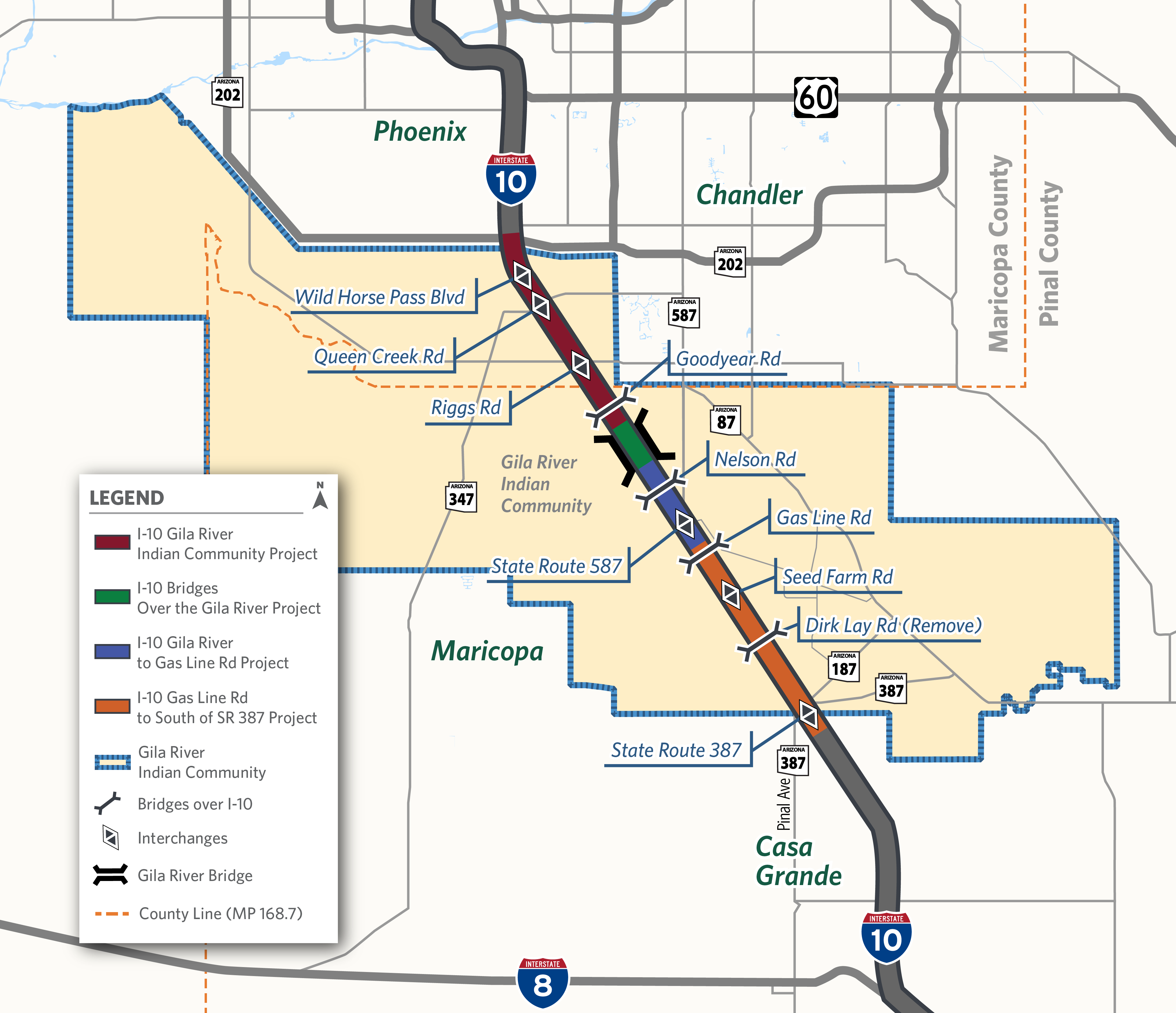
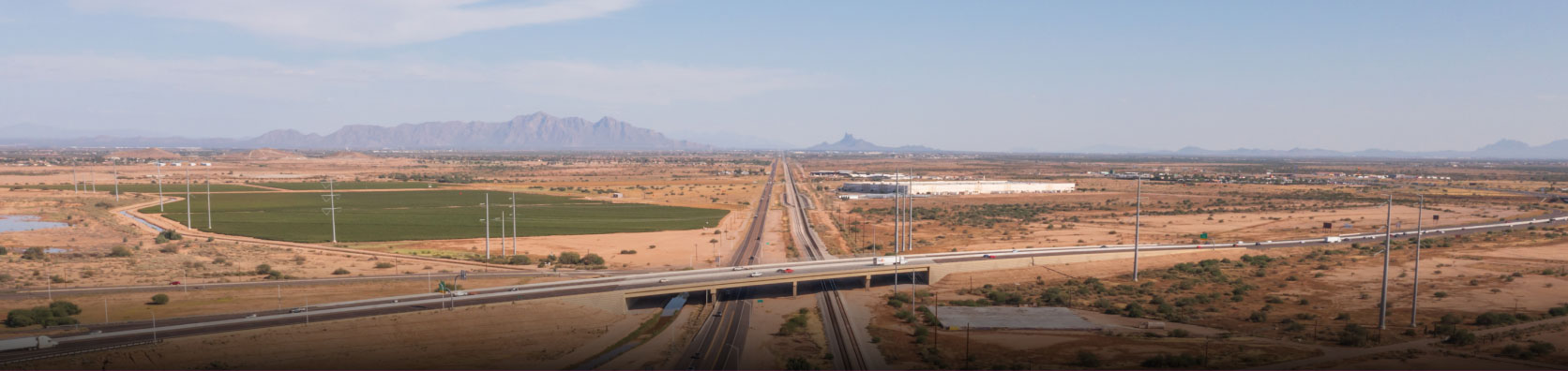
The I-10 Wild Horse Pass Corridor Project’s overall goal is to help reduce congestion and travel times, and increase safety along the 26-mile corridor by adding an additional general-purpose lane in each direction between Loop 202 to just south of State Route 387. Once completed, the entire stretch of I-10 between Phoenix and Tucson will be three lanes in both directions.
The corridor improvements are being completed as four separate, individual projects and the entire project corridor is expected to be completed by late 2029.
So, what’s on the construction checklist?
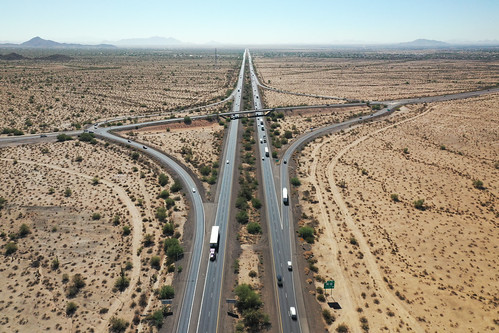
Quite a bit. The Gas Line Road bridge will get a makeover—think wider and stronger. A brand-new traffic interchange is coming to Seed Farm Road, while the existing interchange at Pinal Avenue/SR 387 will be completely reconstructed. And the unused Dirk Lay Road bridge will come down.
These improvements aren’t just cosmetic; they’re designed to ease congestion and improve safety for thousands of daily commuters between Casa Grande and Phoenix.
Patience is the key. This isn’t an overnight project.
At the start of construction, crews anticipate that work will continue through the end of 2027, so drivers should plan for occasional lane shifts and slower speeds in the work zone. The payoff? A corridor that can handle more traffic, reduce bottlenecks, and make the Phoenix-to-Tucson drive far less stressful.
Big changes are ahead in the I-10 Bridges over the Gila River project area.
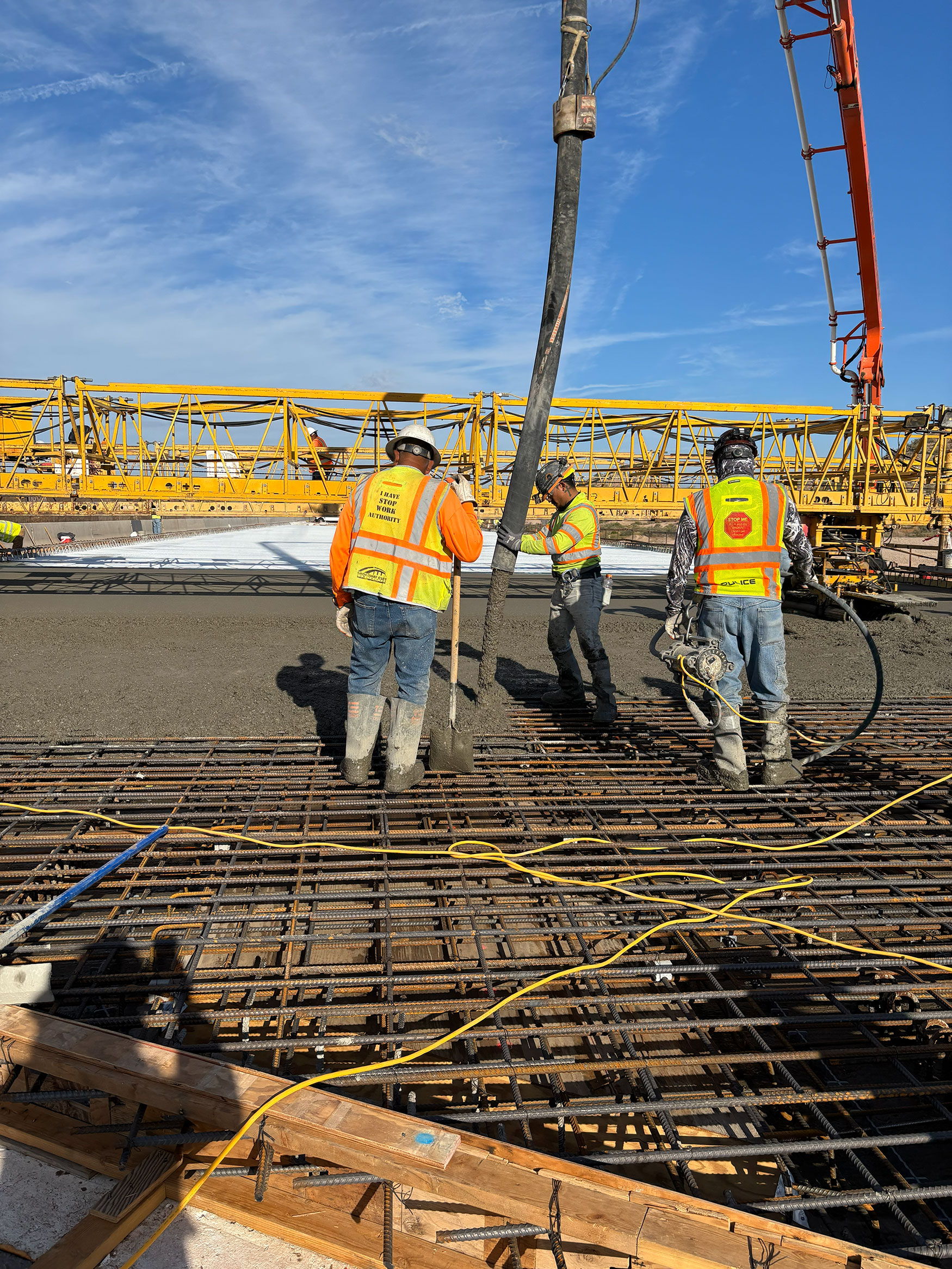
Construction on the I-10 Bridges Over the Gila River segment kicked off in May 2024, and crews have been busy ever since. If you’ve driven through the area lately, you’ve probably noticed the transformation taking shape. Half of the new eastbound bridge is already complete, and the team is closing in on finishing the full westbound structure.
These bridges are being built at a slightly higher elevation and supported by deeper substructures than the original bridges, making them more resilient against flooding and other challenges posed by the Gila River.
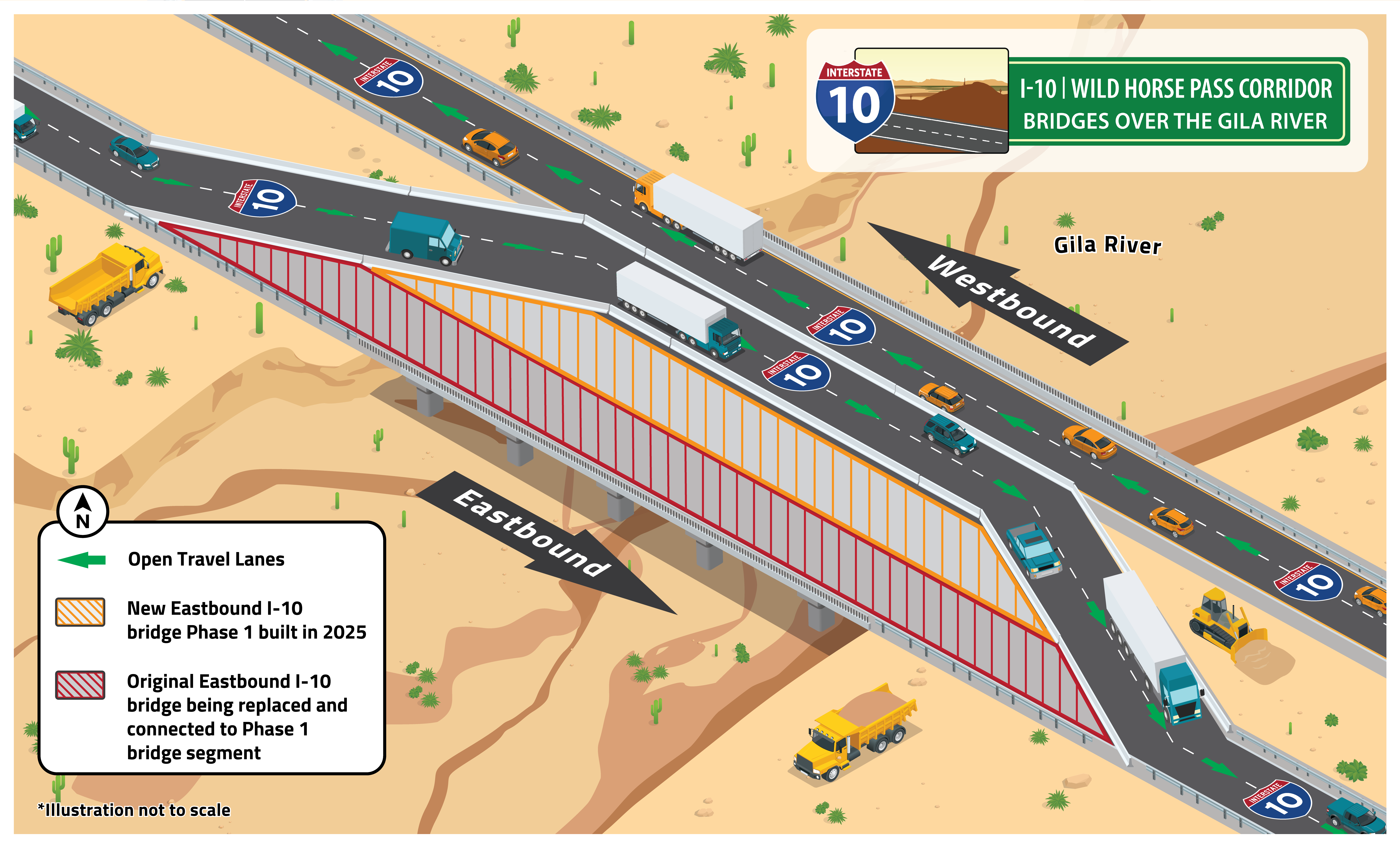
Another traffic shift is on the horizon as crews transition to the next phase of construction. Traffic in both directions of I-10 will soon transition onto the newly built westbound I-10 bridge while crews replace the original eastbound structure. This temporary configuration will allow construction to keep moving forward without shutting down lanes completely.
Watch for more information on the timing of the traffic shift coming in Spring 2026.
As of early 2026, work is expected to wrap up in the I-10 Bridges Over the Gila River segment later this year and when the full corridor opens, the bridges will feature three lanes in each direction, complete with wide shoulders for added safety.
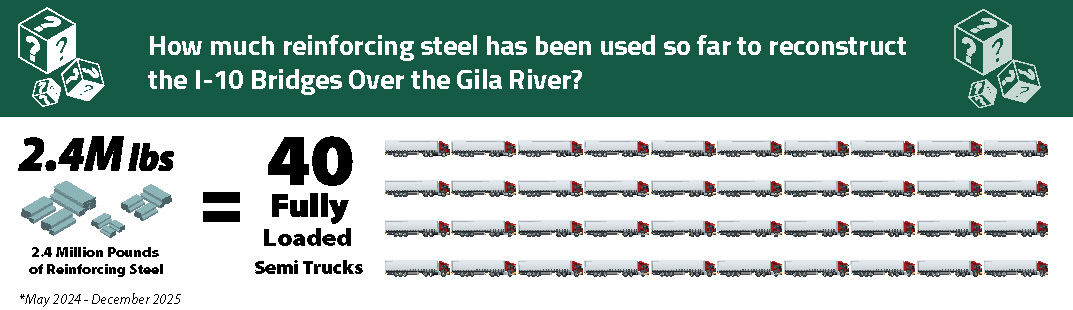
Drivers traveling along I-10 near the Loop 202 (Santan/South Mountain Freeway) may notice early signs of construction in the coming months as design work advances on the northern segment of the I-10 Wild Horse Pass Corridor Project. This 11-mile stretch will extend south from Loop 202 to the Gila River. Crews are preparing for pre-construction activities such as surveying and utility coordination. Active construction on this segment is scheduled to begin in summer 2026. In late 2025, ADOT selected the Coffman-Fisher joint venture as the contractor for this work.
Once complete, this section will tie into other ongoing improvements along the corridor, creating a seamless three-lane connection between Phoenix and Tucson.
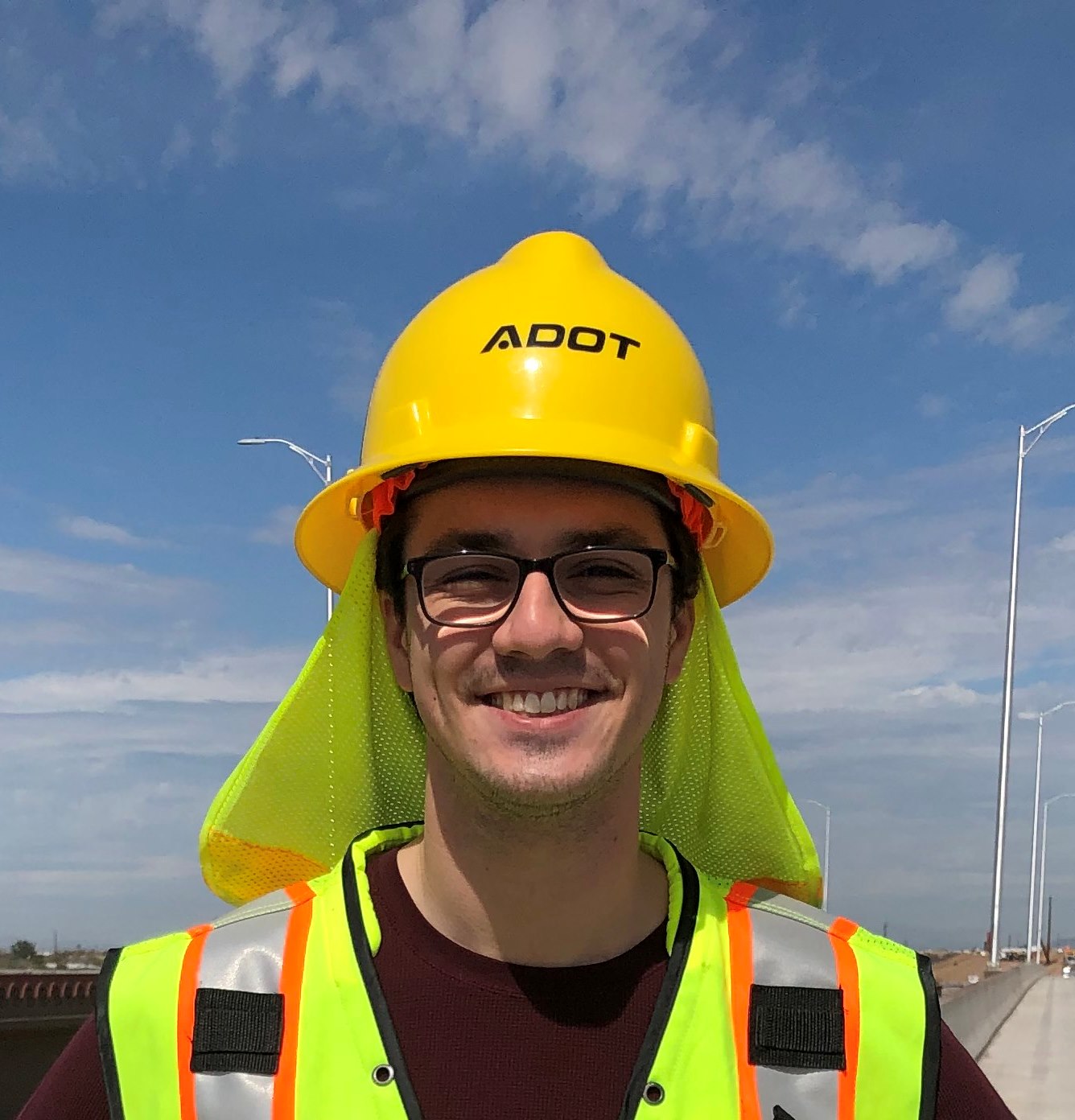
Robby Richards III has spent more than a decade working on Arizona roadway projects through his work at ADOT, first as an intern and now as a construction engineer. In his current role as a senior resident engineer for ADOT’s Central District, he’s one of the key individuals leading the team building the I-10 Bridges Over the Gila River.
While growing up in Chander with the Loop 202 highway basically in his backyard, Robby developed a fascination with roads and bridges. A visit to the Hoover Dam Bypass Bridge during ASU’s Summer Transportation Institute in 2011 cemented his interest in engineering. Shortly after graduating high school in 2013, he was selected as an ADOT transportation intern.
“I was the only high school graduate hired out of 33 interns that year (more than 100 applicants),” Robby said.
During the four-year internship, he rotated through ADOT’s research center, survey, and construction field office departments while working on construction engineering bachelor’s and master’s degrees at Arizona State University. ADOT Senior Deputy State Engineer Rob Samour encouraged him to apply for the ADOT Engineer-in-Training program when he graduated in 2017, and this paved the way for his career at ADOT.
“I have spent time all over the valley and the state working for ADOT, and I truly enjoy the nature of the work building roads to connect people,” Robby said.
Robby has been a project supervisor and resident engineer on several ADOT projects. One of the highlights of his career was working on the SR 24 improvement project where he takes pride in connecting motorists in the southeast Phoenix Metro area and central Arizona.
As the senior resident engineer on I-10 Bridges Over the Gila River project, he’s not only excited about the construction work to widen I-10 and reconstruct the highway’s bridges, but also enthusiastic about the opportunity to learn more about the history and culture of the Gila River Indian Community.
“The Gila River is rich in history, and this perspective is important to highlight when it comes to the area's past history, current impacts, and future implications for all residents of Arizona using I-10 to travel,” he said.
Robby points out that it will take an “enormous amount of work” to widen and improve the traffic interchanges along the full 26-miles of the I-10 Wild Horse Pass Corridor.
“Quality work takes time to build, so please slow down in work zones and be patient,” Robby adds. “We promise it will be worth the wait! The ride between Tucson and Phoenix will be positively impacted for decades to come.”
Robby’s likes to inspire others who are considering careers in construction and engineering. Last spring, ADOT invited students from Skyline High School to visit the I-10 Bridges Over the Gila River work site to see construction crews remove the original westbound I-10 bridge. Robby shared his journey from intern and college student to senior resident engineer with the students and talked about the kinds of career opportunities available to those interested in working on large-scale transportation construction projects.
“The great thing about this job and industry and working at ADOT is that we get to problem solve and work together as a team,” Robby said. “The things we do impact the transportation facilities that people use every day, such as bridges, roads and highways.”
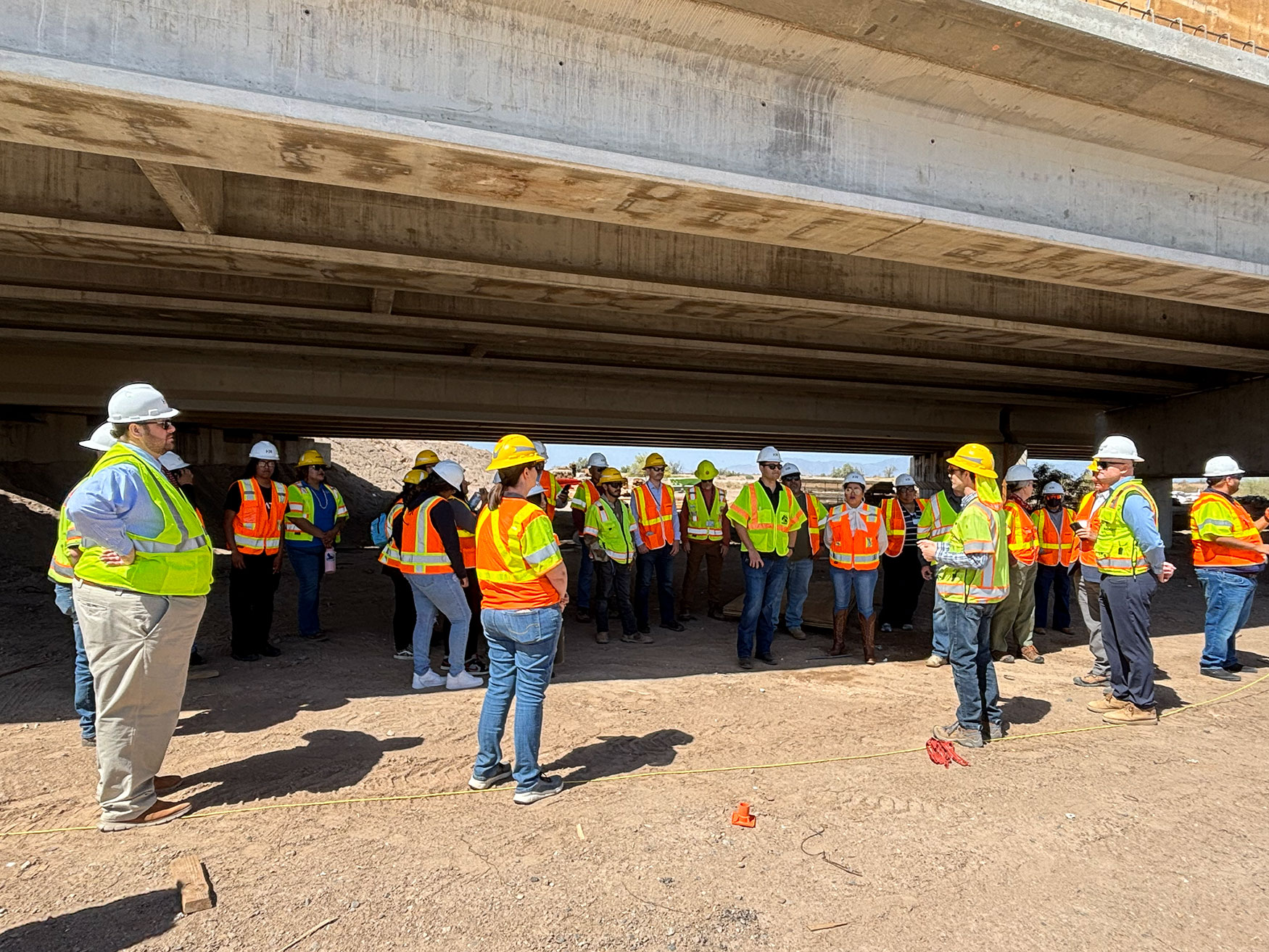
Robby Richards III shares his journey from ADOT intern to resident engineer with students from Sky Line High School.
As construction ramps up along the I-10 Wild Horse Pass Corridor, the project team wants to make sure businesses along or near the corridor, stay in the loop.
To make that happen, the team has a dedicated business outreach coordinator to work directly with corridor businesses to share updates, answer questions, and provide resources. It’s all part of the effort to ensure business within the community are informed at all times during the construction process, since this project will affect them.
Learn more about our business outreach efforts and contact the business outreach coordinator on the I-10 Wild Horse Pass Corridor Resources webpage.
To receive updates and information on the Wild Horse Pass Corridor call the project hotline at: 602.522.7777 or use the online contact form.
Schedules are subject to change based on weather and other unforeseen factors. For more information, please call the ADOT Bilingual Project Information Line at 855.712.8530 or go to azdot.gov/contact and select Projects from the drop-down menu. For real-time highway conditions statewide, visit ADOT's Traveler Information Site at www.az511.gov, Need to know where a milepost is? Click on the "Mile Markers" icon on the map at www.az511.com. Follow ADOT on Twitter (@ArizonaDOT) or call 511, except while driving.